

Five Minutes with Your Money Wall Art: A Daily Success Ritual
Your walls can do more than fill empty space. The right piece of money wall art can become a visual cue for ambition, independence and intentional living.
That does not mean a canvas magically creates success. It means your environment influences what you notice, remember and return to. When you pause in front of a powerful artwork each day, you give your goals a physical place to land.
Try this five-minute ritual. You will need your favourite piece of money wall art, a notebook and a pen. That is it. No elaborate morning routine. No motivational soundtrack. Just five focused minutes to set your direction, recognise what is already working and review the day with greater clarity.
Why Turn Money Wall Art into a Daily Ritual?
Most of us move through familiar rooms on autopilot. We see the same walls, pass the same furniture and repeat the same routines without consciously taking anything in.
A statement artwork interrupts that pattern.
Bold pop art, graphic dollar motifs and energetic street-art textures naturally demand attention. They create a visual “pause button” in your space. Used deliberately, that pause can help you reconnect with the ideas the artwork represents: freedom, financial confidence, creative risk and the courage to think independently.
Gratitude journaling and brief reflective exercises have also been associated with modest improvements in wellbeing. The American Psychological Association’s overview of gratitude research discusses links between gratitude, happiness and life satisfaction, while a systematic review of gratitude interventions found small but consistent positive effects across wellbeing measures.
Your ritual does not need to be perfect or overly serious. Think of it as attention training with a bold visual anchor.
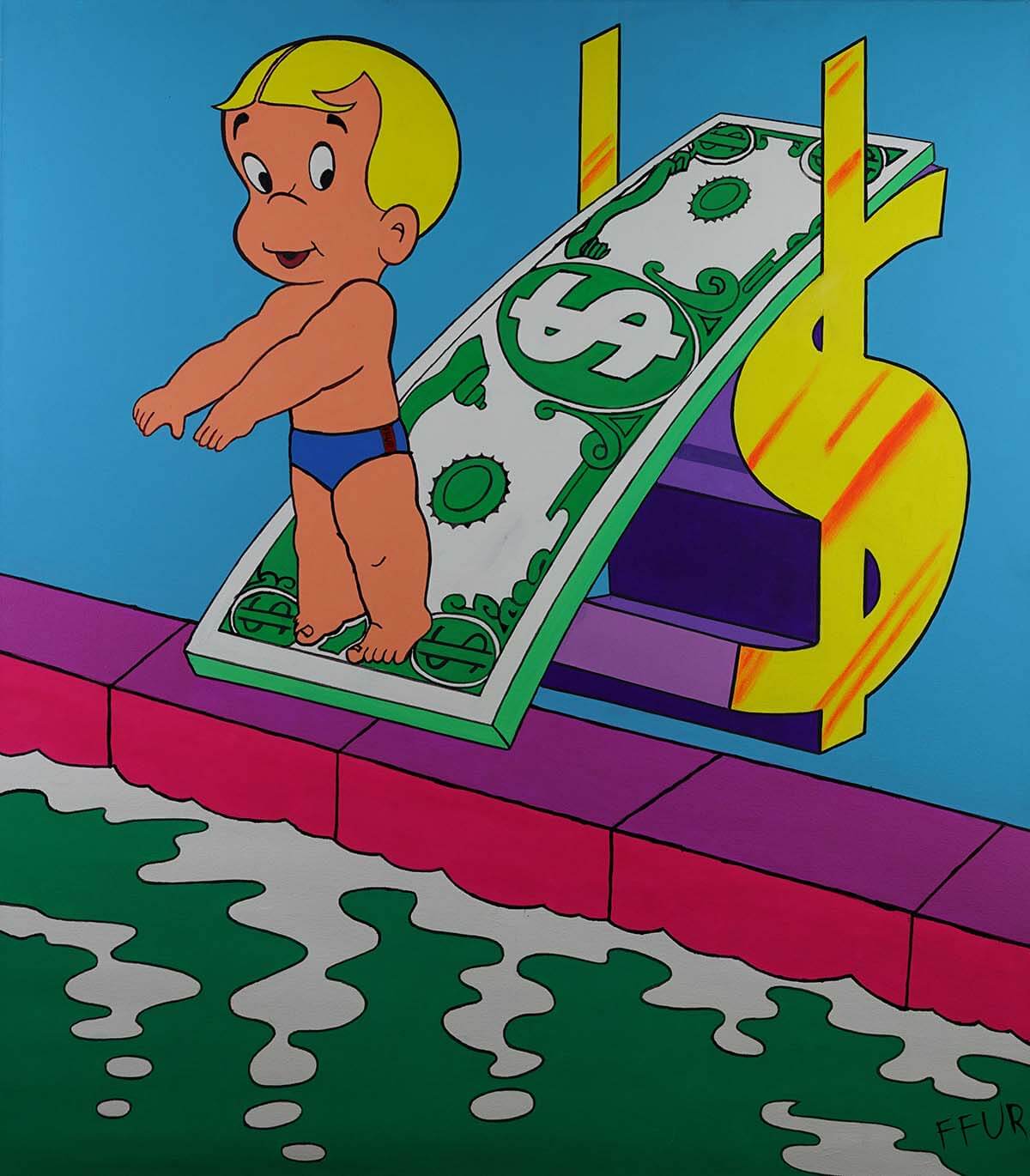
Set Up Your Five-Minute Money Wall Art Ritual
Choose one consistent location. It might be a tranquil morning corner, a home office, a dressing area or the wall opposite your desk.
Place your journal and pen nearby. Keeping them visible makes the practice easier to begin. You could also attach it to an existing habit, such as your first coffee, switching on your desk lamp or closing your laptop at the end of the working day.
This is a simple form of habit stacking: connecting a new action to something you already do. The artwork becomes your visual trigger. See it, sit down, begin.
Consider choosing a piece with enough visual energy to hold your attention. An original canvas can offer texture, scarcity and a strong collector’s presence. An acrylic print can deliver crisp colour, contrast and depth. FFUR’s Acrylic Print collection is an excellent way to bring a sleek, high-impact finish into a modern home or workspace.
Minute One: Arrive and Look Properly
Start with three slow breaths.
Then look at your money wall art for around 30 seconds. Do not scroll your phone or rush ahead to the next task. Notice the colours, outlines, texture and movement. Let your eyes travel across the composition.
Ask yourself:
- What detail do I notice first today?
- What mood does the artwork create?
- Which word best describes the energy I want to carry forward?
You might choose steady, bold, disciplined, independent or open.
This is not about analysing the piece like an art historian. It is about arriving in the room and becoming present. The artwork gives your attention somewhere deliberate to go.
Minute Two: Write One Clear Intention
Write one sentence beginning with:
Today, I intend to…
Keep it practical and within your control.
“Today, I intend to finish the proposal before lunch” is more useful than “Today, I will become successful.” A clear intention turns a vague ambition into a behaviour you can act on.
You could write:
- “Today, I intend to make one confident financial decision.”
- “Today, I intend to protect an hour for deep creative work.”
- “Today, I intend to ask for the opportunity instead of waiting for it.”
- “Today, I intend to spend with purpose.”
- “Today, I intend to move one important project forward.”
Let the artwork’s boldness sharpen your thinking. Money wall art works particularly well here because it can represent more than wealth. It can stand for agency, choice and the freedom to direct your own energy.

Minute Three: Name Three Specific Gratitudes
Now write three things you genuinely appreciate.
Specificity matters. “My life” may be true, but it is too broad to create much focus. Instead, name the details:
- “I am grateful for the client who trusted my judgement.”
- “I am grateful that I have a quiet desk this morning.”
- “I am grateful for the friend who gave me honest advice.”
- “I am grateful that I finally understood the difficult part of the project.”
You do not have to pretend everything is perfect. A gratitude ritual is not a demand to ignore pressure, uncertainty or disappointment. It is simply a way to make sure those things do not become the only story you tell yourself.
Research summarised by the Greater Good Science Center suggests that gratitude practices can support positive mood, life satisfaction and social connection. Keep the exercise honest. One small, real appreciation is more valuable than a page of forced positivity.
Minute Four: Connect the Art to Your Next Action
This is the bridge between inspiration and progress.
Look at the artwork again and ask:
What is one action that would make today feel successful?
Choose something small enough to complete but meaningful enough to matter.
If your intention is financial clarity, your action might be checking a subscription, sending an invoice or reviewing your weekly spending. If your intention is creative independence, it could be sketching for 20 minutes, contacting a gallery or publishing the work you have been holding back.
Write the action down.
Your money wall art is not there to make promises about outcomes. It is there to remind you that outcomes are shaped by repeated decisions. The visual language can be loud: electric colour, heavy outlines, spray-paint marks and rebellious pop-culture references: but your next action can be wonderfully simple.

Minute Five: Review Yesterday Without Judgement
Finish by reflecting on the previous day.
Write short answers to these two prompts:
- What went well yesterday?
- What will I adjust today?
Look for evidence of progress, not just dramatic wins. Did you protect your time? Follow up with someone? Avoid an unnecessary purchase? Make a decision you had been postponing? Small actions are often the real foundation of independence.
For the second prompt, avoid turning the review into self-criticism. You are not putting yourself on trial. You are gathering information.
“Start the difficult task earlier” is useful.
“I always fail” is not.
This final minute turns your ritual into a feedback loop. Intention sets the direction, gratitude widens your perspective and review helps you refine your approach.
Choose Artwork That Can Carry the Ritual
The best piece for this practice is one you actually want to look at every day.
An original work such as FFUR’s “Stretching Dollar” can create a strong focal point for a collector’s office, studio or living room. Its financial freedom theme gives the ritual a direct conceptual connection, while the physical presence of original art makes the moment feel more considered.
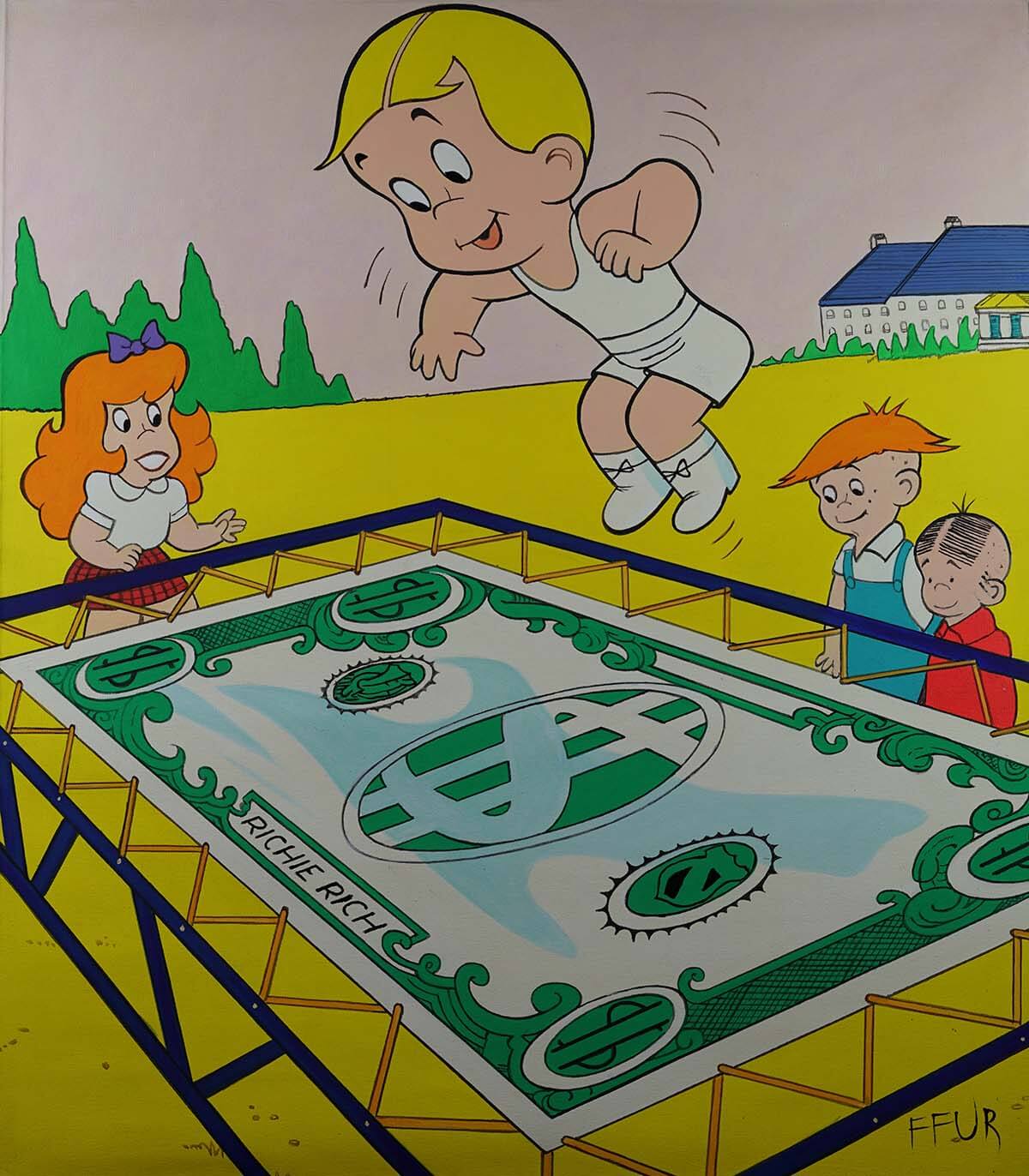
If you prefer luminous colour and a sleek contemporary finish, acrylic can be worth exploring. FFUR describes its acrylic prints as durable, scratch-resistant and designed to enhance colour, contrast and clarity. For a softer tactile effect, consider the Canvas Wall Art collection. If you want a more formal display, browse the Framed Prints collection.
Let the artwork suit the room and the purpose. A vibrant piece above a desk can energise focused work. A more spacious composition in a living room can become a daily reminder without overwhelming the rest of your decor.
Make the Practice Easy to Keep
Try the full five-minute ritual for seven days before changing it.
Keep your notebook in the same place. Use the same artwork. Start at roughly the same time. Remove friction wherever you can.
On busy days, reduce the ritual rather than abandoning it. Look at the artwork, write one intention and choose one action. That may take 60 seconds. Consistency matters more than performance.
You can also vary the prompt once the habit feels established:
- What would financial freedom allow me to protect?
- Where am I playing too small?
- What deserves my attention today?
- What progress am I underestimating?
- Which decision would my future self thank me for?
Do not force the practice if it becomes stale. Gratitude research suggests that frequency and format matter; a routine that feels meaningful is more sustainable than one that becomes mechanical.
Let Your Wall Work Harder
Great wall art changes the atmosphere of a room. Exceptional wall art can change how you use it.
Five quiet minutes with your money wall art will not replace a budget, a business plan or thoughtful financial advice. It can, however, help you begin the day with a clearer intention and end it with a more accurate view of your progress.
Give the ritual a week. Let the colours wake up the room. Let the journal turn ambition into language. Then take one deliberate action.
That is how a statement piece becomes part of your success practice: not through magic, but through attention, repetition and choice.