

Meet the Artist Behind the Mask: FFUR and the Pop Art Canvas Revolution
Some artists build their reputation through gallery openings, interviews and carefully documented biographies. FFUR has chosen a different route.
The artist remains anonymous, allowing the work to lead the conversation. There is no conventional celebrity persona competing with the artwork. Instead, the focus stays on the colour, the symbols, the cultural references and the questions hidden beneath each bold composition.
FFUR’s pop art canvas work combines the instant visual impact of comic-book imagery with the raw energy of street art. Saturated colours meet heavy black outlines. Playful characters meet sharp commentary about money, power and financial freedom.
The result is art that looks vibrant from across the room but becomes more complex the longer you spend with it.
An Anonymous Artist With a Distinctive Visual Language
FFUR’s public story is intentionally concise. The official brand describes FFUR as an anonymous street artist known for a subversive approach and a signature use of the Richie Rich character. The work has appeared in cities around the world, attracting attention from collectors and street-art enthusiasts.
That anonymity is part of the appeal.
Rather than presenting a detailed personal mythology, FFUR allows recurring visual ideas to create the identity. Dollar bills, diamonds, bold gestures and exaggerated symbols of wealth appear alongside spray-paint textures and graphic colour fields. Each work feels connected to the same artistic world, even when the composition changes.
This is especially important for collectors. A recognisable style creates continuity across a collection. You can choose a single statement piece, or gradually build a group of works that share a visual rhythm without looking identical.
The anonymity also gives the art a slightly rebellious edge. It recalls the original spirit of street art, where the image on the wall could become more important than the name behind it.

From Street Art Energy to Pop Art Canvas
Street art and Pop Art may have different histories, but they share an interest in familiar imagery.
Pop Art emerged in Britain and the United States during the 1950s and flourished during the 1960s. As Tate explains in its overview of Pop Art, the movement drew inspiration from advertising, comic books, packaging, celebrity culture and other forms of popular media.
The Metropolitan Museum of Art describes Pop Art as a movement that appropriated everyday consumer products and popular-culture images in bold, graphic formats. These works reflected the values, habits and obsessions of modern society.
FFUR continues that tradition but translates it through a contemporary street-art filter.
The clean, recognisable image is only the starting point. Spray-paint marks, drips, splatters and distressed surfaces disrupt the polished appearance. Flat blocks of electric blue, canary yellow and saturated red create immediate visual tension. The composition may feel commercial at first glance, but the surface keeps it raw.
That contrast is central to the FFUR aesthetic:
- Pop culture meets urban expression.
- Clean graphic shapes meet deliberate imperfection.
- Luxury symbolism meets graffiti attitude.
- Nostalgia meets contemporary commentary.
- Decorative colour meets an uncomfortable question.
This is what makes a FFUR pop art canvas more than a simple reproduction of a familiar character. The image becomes a vehicle for discussing aspiration, consumerism and control.
Why Richie Rich Became the Signature Motif
Richie Rich is one of the most recognisable symbols of fictional wealth in popular culture. He has the money, the mansion and the apparent freedom to do almost anything.
That makes him an ideal subject for FFUR.
At a basic level, the character represents abundance. At a deeper level, he raises questions about where wealth comes from, who gets access to it and what financial freedom actually means.
FFUR’s work plays with both readings. The imagery can feel celebratory, energetic and unapologetically luxurious. At the same time, the exaggerated scale and graffiti treatment encourage you to look again.
Is the work celebrating the fantasy of wealth? Is it questioning inherited privilege? Is it expressing the desire to escape financial insecurity? The answer can change depending on the piece and the viewer.
That openness gives the artwork lasting appeal. A purely decorative image may look impressive for a season. A work with interpretive tension can continue to reveal new ideas as you live with it.
In Original Art “Stretching Dollar” by FFUR, the idea of making a dollar go further becomes a playful visual metaphor. The title suggests resourcefulness, movement and control rather than passive luxury.
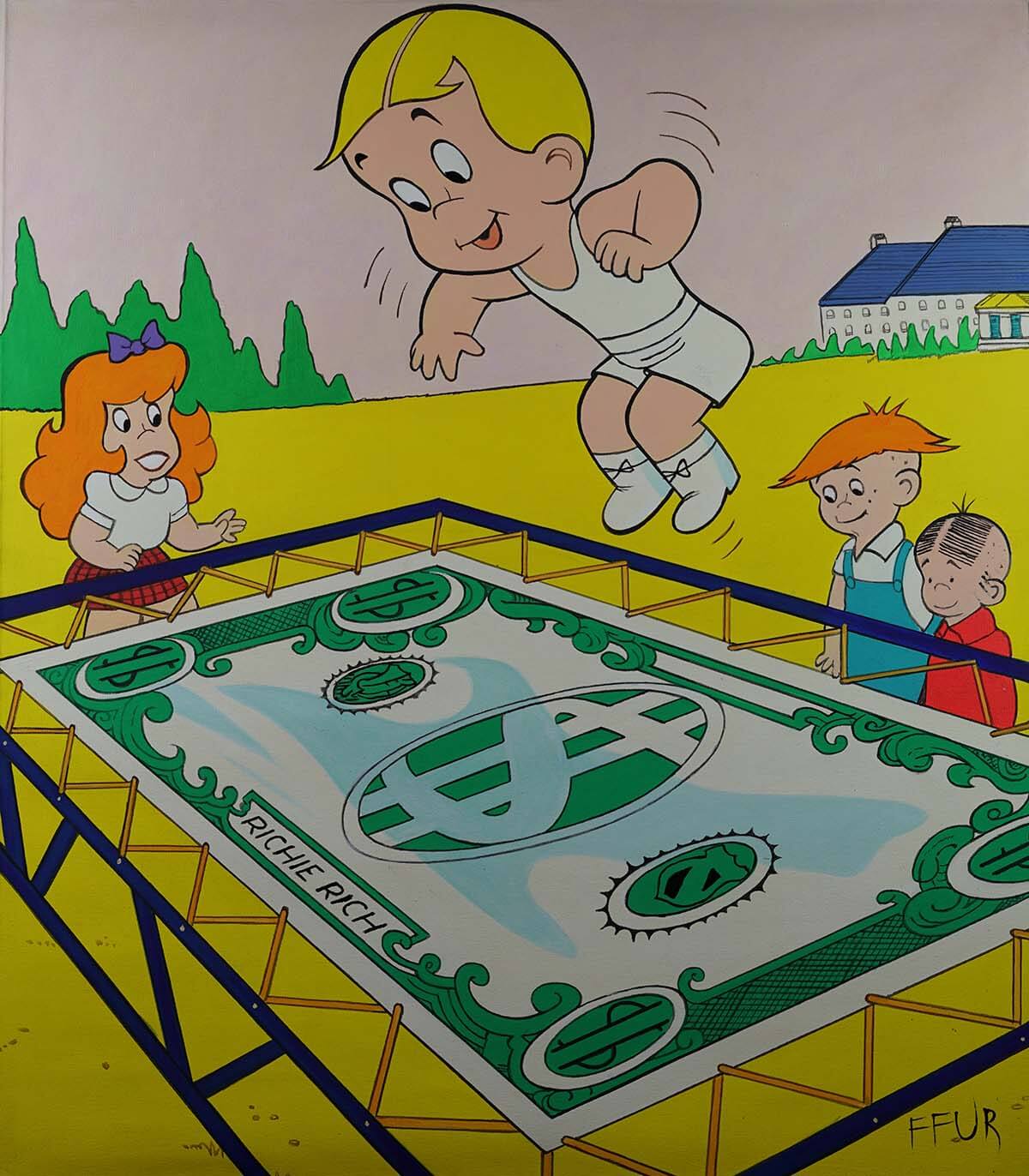
Other works, including “Money Dive” and “Diamonds Shine So Much Better”, extend the same conversation through different symbols. Money becomes something to dive into, stretch, pursue or question.
That is the subversive quality of FFUR’s approach. The work is not simply about looking rich. It is about the emotional charge attached to money: ambition, insecurity, freedom, status and risk.
The Artist’s Journey Is Written Into the Surface
Because FFUR remains anonymous, the physical language of the artwork becomes especially important.
You can read the journey through the layers. The hard graphic outlines suggest the discipline of commercial illustration. The overspray and gestural marks bring in the unpredictability of the street. The distressed textures make the surface feel weathered, as though the artwork has passed through a city rather than simply arriving from a printer.
This layered quality helps explain why FFUR’s work translates naturally to canvas.
A pop art canvas gives the composition a physical presence. The image is not confined to a screen or a small paper print. It becomes a large-scale object with texture, colour and visual authority.
For collectors, that presence matters. You are not only buying an image; you are choosing how that image will occupy your space.
A single original can anchor a living room, creative studio, office or private collection. It can introduce a sharper, more vibrant energy into an otherwise restrained interior. It can also work as a counterpoint in a room filled with minimalist furniture, earthy materials or sleek architectural lines.

Building Collector Confidence Through Choice
One of FFUR’s strengths is the range of formats available to collectors.
The Original Art collection is designed for people who want a one-of-a-kind piece connected directly to the artist’s practice. FFUR states that original works are being added gradually, making the collection especially relevant to collectors who want to follow the development of the artist’s market.
A canvas print offers a more accessible way to bring the visual language into your home. According to FFUR’s canvas wall art collection, printed canvas is produced from an image and stretched into a frame for display.
For a sharper, more luminous finish, consider exploring the Acrylic Print collection. Acrylic can intensify colour, contrast and perceived depth, making it well suited to FFUR’s saturated palette and graphic compositions.
The Framed Prints collection offers another route, particularly if you prefer a finished, museum-style presentation.
This range means you can select a format according to your collecting goals:
- Choose an original for rarity and direct connection to the artist.
- Choose canvas for tactile warmth and a contemporary wall presence.
- Choose acrylic for sleek depth, clarity and vibrant colour.
- Choose a framed print for a polished, ready-to-display finish.
Availability, pricing and specifications can change, so it is sensible to review the individual product page before purchasing.
A Global Street-Art Presence With a Personal Feel
FFUR’s work is described as appearing in cities around the world, but its appeal remains personal.
The images speak to a universal desire: to gain more control over your time, choices and future. That message can resonate with an entrepreneur in a home office, a collector in a city apartment or a street-art fan creating a bold gallery wall.
The global quality comes through in the visual references. Currency patterns, urban surfaces, comic-book language and graffiti marks create a vocabulary that feels immediately familiar across borders.
Yet the meaning is still yours to interpret.
One collector may see ambition. Another may see satire. Someone else may simply respond to the electric colour and fearless composition. Strong art does not require every viewer to reach the same conclusion.
It needs to create enough energy for people to stop, look and talk.
How to Choose Your First FFUR Pop Art Canvas
If you are new to FFUR, start with the piece that creates the strongest emotional reaction.
Look at the colour palette first. Do you want electric blue and canary yellow to energise a neutral room, or would saturated reds and darker tones better suit your interior?
Next, consider the message. A work focused on independence may suit a home office or studio. A more playful money-themed composition could bring energy to a living room, hallway or entertainment space.
Finally, measure your wall before choosing a format. FFUR’s work contains strong visual information, so it often benefits from breathing room around the edges. Avoid placing it where furniture, shelving or competing artwork will interrupt the main composition.
Let the piece lead the room.
The Mask Is Part of the Message
FFUR’s anonymity is not an absence of identity. It is a creative decision.
By staying behind the work, the artist keeps attention on the ideas: wealth, aspiration, freedom, consumer culture and the visual language of the street. The Richie Rich motif provides instant recognition, while the graffiti treatment prevents the image from becoming predictable.
That combination is the foundation of the FFUR pop art canvas revolution.
The work is bold enough to transform a wall, detailed enough to reward close attention and open-ended enough to become part of your own story. For collectors, it offers a distinctive entry point into contemporary street art. For design-led homeowners, it delivers an immediate focal point with real cultural friction.
Choose the piece that stops you in your tracks.
Then give it a wall big enough to make some noise.